

### Blog Post:
Clover lawn is rapidly gaining traction with suburban homeowners who want a greener, low-input lawn without sacrificing curb appeal. This guide breaks down real-world savings on water and fertilizer, the honest trade-offs, and straight-shooting advice for designing and maintaining your own clover lawn that handles family life—without surprises.
Key Takeaways
- Clover lawns save 30–75% on water and up to 75% on fertilizer use compared with regular turf, backed by case studies and research.
- Micro clover lawns require much less mowing—just 2–4 times a year—and can lower total lawn maintenance costs by 60–70%.
- Design tweaks and hybrid approaches help handle foot traffic concerns and maximize curb appeal, but clover lawns are not ideal for heavy sports or strict HOA neighborhoods.
- Why consider a clover lawn as your grass lawn alternative
- Step-by-step conversion & maintenance calendar
- Advanced analysis & common pitfalls
- Conclusion
- Frequently Asked Questions
Why consider a clover lawn as your grass lawn alternative
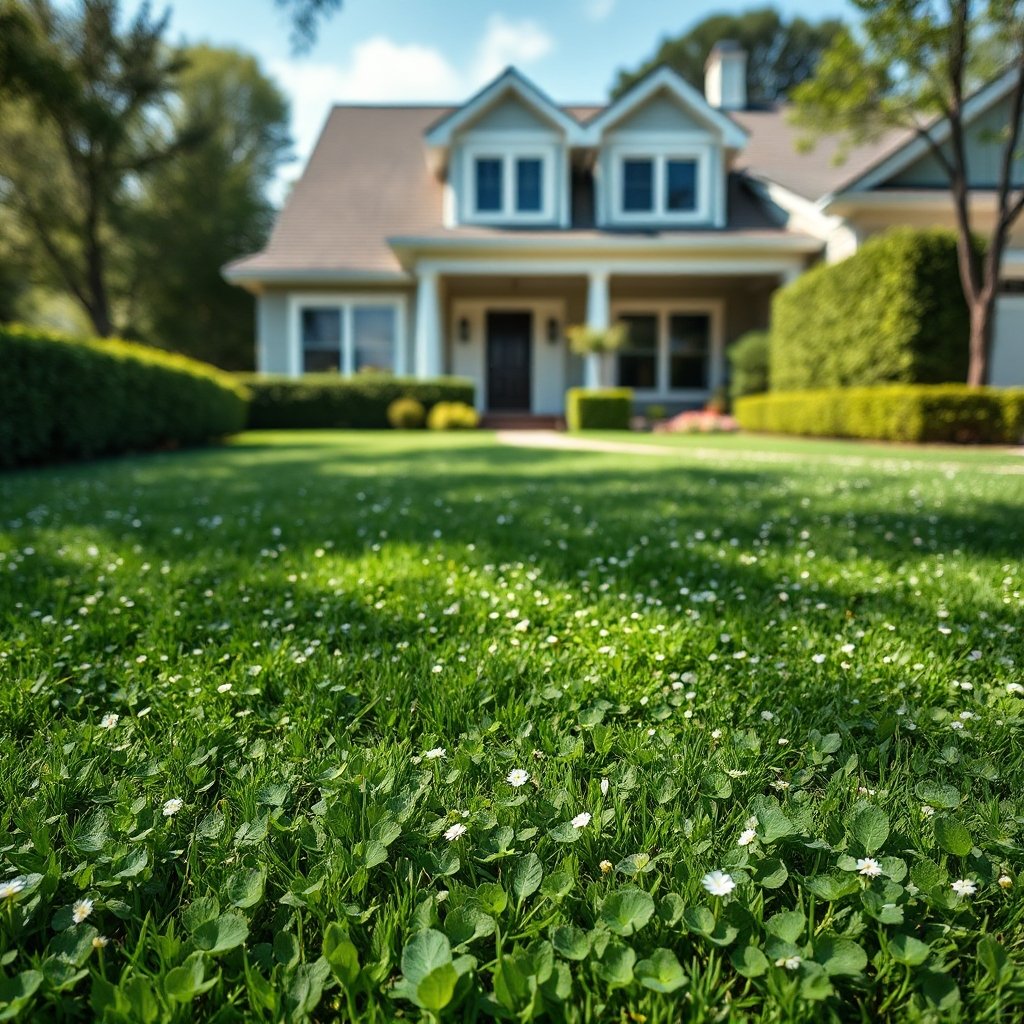
A clover lawn—especially one seeded with micro clover—offers a radically different experience for homeowners who want an eco-friendly, low-maintenance, and visually inviting grass lawn alternative. Micro clover, a smaller-leafed variation of white clover, blends seamlessly into lawns, tolerates close mowing, and brings unique benefits that traditional turf simply can’t match:
- Drought tolerance & less watering: Once established, micro clover lawns cut water use by about a third to three-quarters compared with classic grass. Several studies report 30–50% less water is needed for micro clover lawns [1], with extension guides noting possible 50–75% savings.
- Low mowing: The slow, dense growth of micro clover dramatically reduces mowing—think 2–4 times per year instead of 25–30.
- Nitrogen self-feeding: Clover naturally fixes up to 200 pounds of nitrogen per acre annually, nearly removing the need for synthetic fertilizer.
- Pollinator support: Clover flowers attract bees and other beneficial insects, boosting biodiversity in suburban settings.
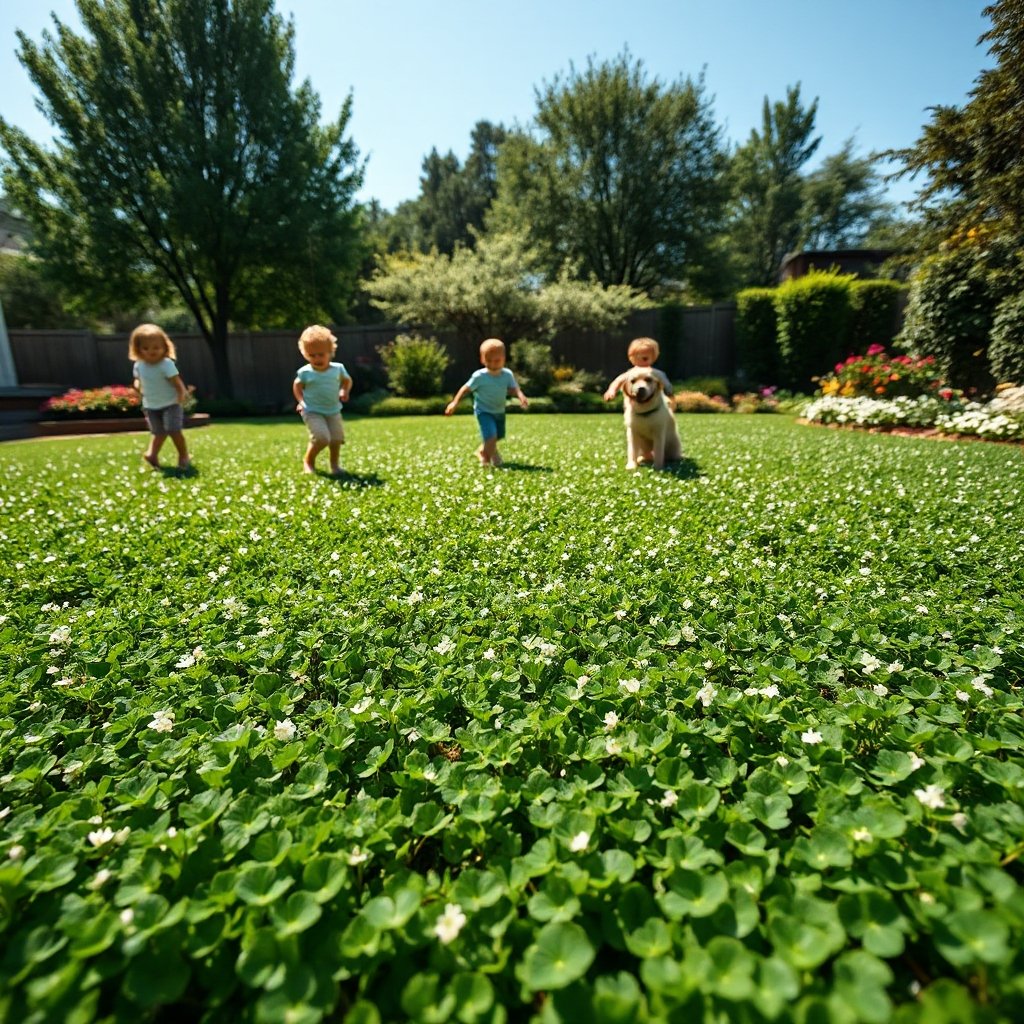
- Pet and family friendly: Clover resists pet urine burn and tolerates light play, making it suitable for backyards and front yards alike.
Best use-cases include low water regions, families with moderate yard traffic, and anyone seeking an eco lawn idea that minimizes time, cost, and environmental impact.
Step-by-step conversion & maintenance calendar (what to do and when)
Switching to a clover lawn requires some planning, but pays off quickly with less work and lower bills. Here’s exactly how to convert and care for your drought resistant lawn.
- Soil test: Before you start, use a simple soil test kit to check pH (ideal: 6–7) and fertility. Adjust pH as needed with lime or sulfur for best clover growth.
- Seed choice: Opt for micro clover seed (Trifolium repens var. Pipolina or AberAce) for a tidier look and fewer flowers than standard white clover. For mixed lawns, blend 5–10% micro clover seed with fescue or perennial rye.
- Timing: Seed in early spring or early fall for best results. Soil should be moist but not soaked.
- Seeding rates: For a pure clover lawn, apply 1–2 lbs per 1000 sq ft. For over-seeding, use half the rate.
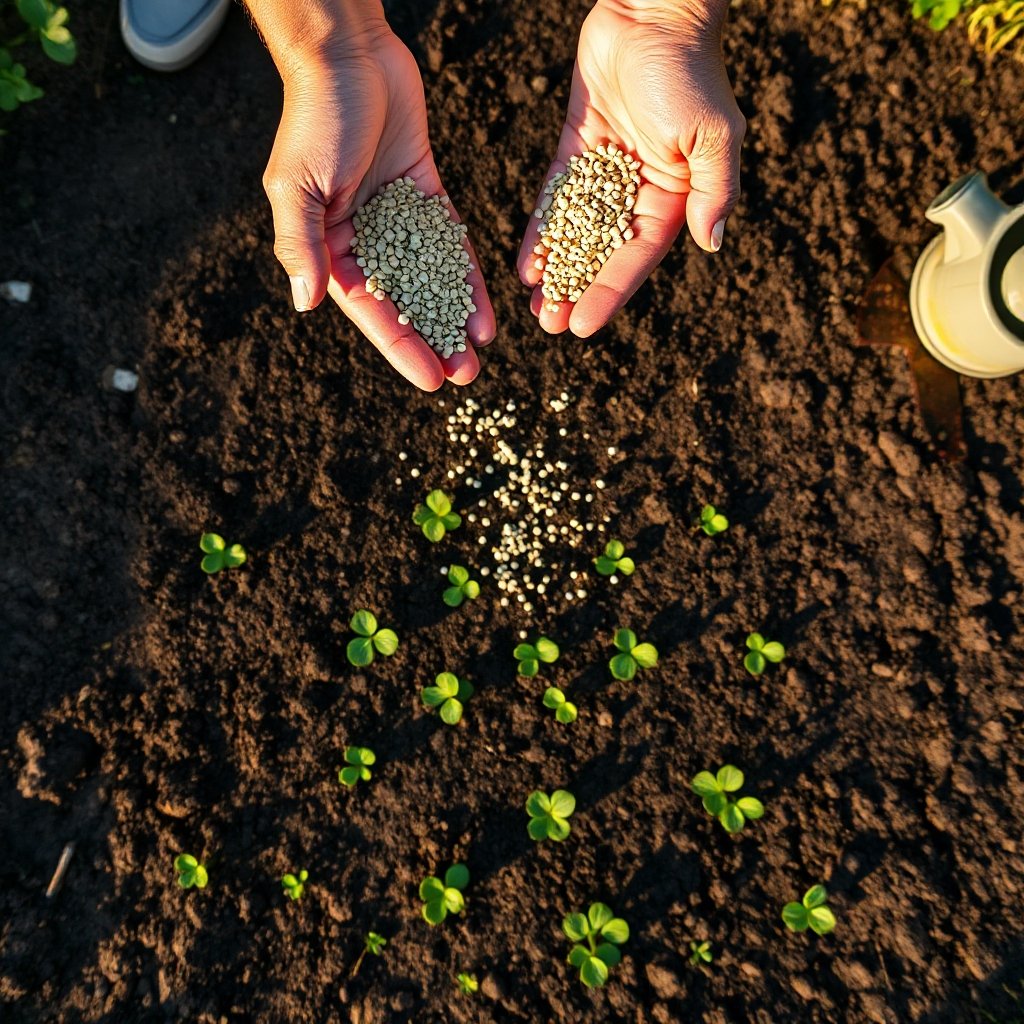
- Seeding process: Mow existing grass short. Rake or aerate to expose soil. Spread seed evenly by hand or with a spreader. Lightly rake in.
- Irrigation during establishment: Water lightly 1–2 times daily until clover sprouts (7–14 days), then taper back. Avoid overwatering—clover hates soggy roots.
- Mowing: Set mower height to 3–4 inches. Once clover is mature, mow every 6–8 weeks for neatness. Pure clover lawns need just 2–4 mowings per year.
- Fertilization: Most micro clover lawns need little or no synthetic fertilizer. If mixing with grass, a small spring feeding helps the grass thrive while clover provides most of the nitrogen. Avoid “weed and feed” mixes—many will harm your clover.
- Reseeding: Expect to overseed pure clover lawns every 2–3 years to keep them dense, especially after harsh winters.
- Seasonal care: Rake leaves in fall, water if extreme drought hits, and be ready for dormancy (browning) in cold mid-winter regions.
Regular maintenance is simple:
- Spot-weed early and manually, especially in the first season—micro clover usually suppresses weeds once mature.
- Reduce watering gradually after the first season. Once mature, micro clover thrives with 30–75% less water than turf [10].
For homeowners who want even less hassle, installing a robotic lawn mower makes the occasional mow nearly effortless, as most robotic mowers are micro clover-compatible.
Advanced analysis & common pitfalls
No solution is perfect. Here’s a realistic look at the challenges, how they stack up versus turf, and what most articles fail to tell you.
| Feature | Micro Clover Lawn | Traditional Turf Lawn |
|---|---|---|
| Water Use | 30–75% less (after establishment) | High (especially in summer drought) |
| Fertilizer Need | Supplies 50–200 lb N/acre per year (up to 75% less needed) | Regular feeding (synthetic recommended 2–4x/year) |
| Mowing Frequency | 2–4x/year | 25–30x/year |
| Traffic Durability | Fine for light use and play, not for heavy sports | Can be selected for high traffic zones |
| Biodiversity | Attracts pollinators, some occasional blooms | Low—monoculture, not pollinator friendly |
| Appearance | Softer, less formal; looks “weedy” to some | Uniform, classic appearance |
| Dormancy | May brown/go dormant in winter in cold regions | Some species brown in heat or cold; others stay green |
| Reseeding Need | Every 2–3 years (pure clover) | Occasional patch repair |
| HOA/Local Rules | Potential compliance issues in formal neighborhoods | Usually allowed |
Top homeowner complaints & trade-offs
- Durability: Micro clover lawn handles casual family traffic but not repeated heavy sports or constant dog runs. Solution: Use mixing, path definition, or install reinforced zones for play areas.
- Appearance: Looks less manicured and more “natural.” Micro clover offers a finer leaf and fewer blooms than standard clover, but may still appear “weedy” in strict HOA neighborhoods.
- Bees and Bloom Staining: Occasional white flowers attract bees (great for biodiversity, not for allergy-sensitive households). Pet and child clothing may stain when blooms are abundant. Mow just before peak bloom to minimize.
- Dormancy: In harsh winters or severe drought, clover browns but recovers; not evergreen in all climates.
- Seed Cost: Initial seed purchase is higher than grass seed, but pays off over several years through savings [3].
Real-world cost & water savings: A St. Louis case
In a St. Louis homeowner’s experience, switching to a clover lawn reduced annual maintenance costs by 60–70%. The family reported that during a three-week dry spell with just 0.2 inches of rainfall, their micro clover lawn needed watering twice—neighboring grass lawns dried out and needed daily irrigation [7].
- Expect realistic savings on both water (up to 75%) and fertilizer (30–75%), with less mowing and fewer chemical applications.
What most guides don’t tell you
- Carbon & climate impact: Research quantifies water and fertilizer savings, but not deeper carbon sequestration or heat-island mitigation. Long-term climate and soil health impact is likely positive but not well measured. For a fuller eco-benefit, combine clover with a micro meadow lawn in part of the yard.
- Stormwater/runoff: More research is needed on how clover affects runoff in heavy rainfall—preliminary findings are promising, especially for reducing fertilizer pollution.
- Cost model: Few calculators factor the higher upfront seed cost of micro clover against years of savings; break-even is often within 2–3 years.
- Hybrid design: Most top-ranking articles overlook layout ideas that use micro clover in the lowest-maintenance zones, and keep traditional turf in high-traffic or HOA-visible areas. This hybrid strategy gives the “best of both” and is highly recommended for suburban families.
Conclusion
A clover lawn delivers proven savings in water, fertilizer, and maintenance—real numbers validated by homeowners and extension experts alike. Yet, switching to this grass lawn alternative isn’t one-size-fits-all. If you’re ready for 30–75% less watering, up to 75% less fertilizing, and far fewer hours mowing, a thoughtfully designed clover lawn could transform your yard and your weekends. Review your HOA covenants, consider a hybrid approach for traffic areas, and start with a soil test. Clover lawn is the eco-friendly upgrade that makes a difference.
Take action: Download a free maintenance calendar for your transition, or explore more expert home upgrades like micro renovations, DIY spa bathrooms, or a curved sofa for your living room.
Frequently Asked Questions
How much water will I actually save with a clover lawn?
Expect to use 30–75% less water compared with a regular grass lawn after the first year. Early on, you’ll need to water regularly to establish the clover, then reduce watering in year two and beyond.
Is a clover lawn safe for pets and families?
Yes. Micro clover tolerates pet urine better than most grasses and stays soft and cool underfoot. Occasional flowers can attract bees—mow before bloom to minimize bees and reduce potential staining.
Will a clover lawn handle foot traffic and play?
Micro clover lawns tolerate light to moderate play, but repeated soccer games or dog traffic may thin the coverage. For heavy use, blend micro clover with turf in paths or play zones, or reinforce with stepping stones.
How often do I need to reseed or mow?
Expect to overseed every 2–3 years for pure clover lawns. Mow as little as 2–4 times a year for a tidy look.
What are the key differences between micro clover and regular white clover?
Micro clover forms a denser, shorter lawn with far fewer flowers, making it better for mowed, tidy lawns in residential settings. Regular white clover grows taller and blooms more heavily.
—