

### Blog Post:
Curved sofa styles are transforming living rooms, not just Instagram feeds. If you want a statement piece that works for real homes—meaning it actually fits, lasts, and suits the way you live—this practical guide blends trend data with design-led, hands‑on planning advice. Let’s cut through the hype and find the curved sofa that fits your apartment, lifestyle, and budget without regrets.
Key Takeaways
- Market demand for curved sofa styles is surging, with buyer reviews citing room fit, modular stability, and fabric care as top complaints—knowing how to size and select is essential.
- Boucle and velvet upholstery dominate the trend, but each has tradeoffs for durability and care—match fabric choice to actual usage, not just appearance.
- Buying the right curved sofa means balancing sculptural appeal, practical construction details, delivery logistics, and honest price expectations.
- Why curved sofas are having a moment
- Curved sofa vs organic shape sectional vs rounded sectional couch — which one fits your lifestyle?
- Materials & upholstery: why boucle and velvet dominate the look (and what to watch for)
- How to size a curved sofa for your room (the measurement blueprint most articles omit)
- Modularity, connections and assembly — avoiding wobble and reconfiguration regrets
- Durability & construction specs you should demand (what product pages rarely disclose)
- Cleaning, maintenance and real‑world care for boucle and velvet
- Price breakdown — mass, mid-range and custom: what you’re really paying for
- Delivery, returns, warranties and the buying checklist
- Styling and layout ideas — modern curved sofa ideas for real homes
- Quick shopping rubric + one‑page decision flow
Why curved sofas are having a moment
Curved sofas are at the epicenter of the living room trend cycle, with designers and social clients both gravitating toward organic shapes. There are a few key drivers: a revived love for mid-century modern silhouettes, a shift to open-plan living where sculptural furniture breaks up space without imposing barriers, and the preference for “conversation circles” that invite interaction. According to industry data, the broader furniture market surged from about $568 billion in 2024 and is projected to hit $878 billion by 2032, with search interest for “curved sofa” peaking at nearly 120,000 monthly global queries in 2023–24 (source). That’s no flash-in-the-pan: more brands are launching rounded options across every price bracket, giving you more real choices than ever.

Curved sofa vs organic shape sectional vs rounded sectional couch — which one fits your lifestyle?
Let’s clear up the jargon. A curved sofa is usually a single sculptural piece—think a sinuous wave that acts as both showstopper and conversation starter. An organic shape sectional or rounded sectional couch breaks up that arc into modules. Sectionals offer more flexible seating and can be reconfigured if your needs change. Typical sectionals out-seat their single-piece cousins and adapt better to social or open-plan layouts. Downsides? Connections can loosen, and more pieces mean more delivery and assembly steps (details here).
Choose a single curved sofa for: statement power, smaller rooms, and if you rarely rearrange. Pick an organic shape sectional if: you entertain groups, need modularity, or work with a tricky floor plan.
Materials & upholstery: why boucle and velvet dominate the look (and what to watch for)
A boucle curved sofa is tactile and cozy, thanks to the looped yarn texture that highlights organic curves. Velvet, still leading the high-end category, offers rich sheen and deep color. Why the focus on these fabrics? Boucle’s market share grew to approx. 12% of the “Other” upholstery category in 2025, the largest bump since 2023, while velvet remains a go-to for luxury pieces (see stats here).
But know your tradeoffs: Boucle is less pet- or child-friendly—snagging or heavy pilling happens with high use. Velvet ages well but can fade or crush with sunlight or spills. Performance microfibers now join the field for durability if practical living trumps pure style.
How to size a curved sofa for your room (the measurement blueprint most articles omit)
Sizing a curved sofa is trickier than it seems—one third of complaints on retail sites center on fit, specifically sweeping arcs that overshoot expectations. Here’s how to get it right:
- Measure the arc: Imagine the sofa as part of a circle. Find the radius (center of curve to front edge); most products list this or you can ask.
- Calculate footprint: Use painter’s tape to mark both the deepest point and endpoints of the arc. Use butcher paper for a full-scale outline if possible.
- Check clearance: Allow at least 30-36 inches between the sofa’s edge and walls or walkways. In small apartments, 24 inches is acceptable but tight.
- Map sightlines: Ensure the curve faces focal points—TVs, fireplaces, or entryways—to keep the space open and functional.
- Floor plan trick: On paper or in an app, input dimensions for both room and sofa (arc radius, width, seat depth). Overlay shapes to ensure no bottlenecks for walking.

Apartment sizing checklist:
- Max overall length: 72-96 inches
- Depth (front to back): 34-42 inches
- Arc radius: 48-60 inches (most compact models)
- Allow for narrow entry doors, elevators, and stairwells
Open-plan living checklist:
- Max overall length: 108-144 inches
- Depth: 40-48 inches
- Arc radius: 60-72+ inches
- Focus on clear walkways and conversation sightlines
Remember, rounding over two inches in any direction adds up—always measure twice, buy once.
Modularity, connections and assembly — avoiding wobble and reconfiguration regrets
Not all connections are equal. For an organic shape sectional or rounded sectional couch, check how modules fit together—hidden brackets, cam locks, or bolt-through systems are common. About 25% of retailer reviews mention frustration with wobble or loose hardware (review insights).
In store, physically test stability at the seams—press down and shift side-to-side. Ask sales reps to demo detachment. For in-home assembly, follow torque specs and check all hardware is tight. If you want zero hassle, pay for white-glove delivery that includes setup and removal of packaging.
For frequent layout changes, choose sectionals with positive-lock hidden brackets. Avoid clip-only or hook-and-loop designs for larger, heavier sofas.
Durability & construction specs you should demand (what product pages rarely disclose)
A lasting curved sofa depends on what’s under the surface. Demand hardwood frames (kiln-dried if possible), reinforced stretcher bars, and at least “sinuous spring” or webbing suspension. Top-tier pieces may offer eight-way hand-tied springs, but expect to pay for it.
Most buyer complaints about sag (about 18%) stem from cheap foam or fiber cushions that lose support quickly. Prioritize high-density foam (1.8+ lb/ft3) or a foam-core with a feather wrap for comfort that lasts years, not months.
| Feature | Entry (Mass-Market) | Mid-Range | High-End |
|---|---|---|---|
| Frame | Plywood or MDF, minimal reinforcement | Mixed hardwood/plywood, stretcher bars | Kiln-dried hardwood, double-dowel joints |
| Suspension | Webbing | Sinuous springs | Eight-way hand-tied |
| Cushion Fill | Polyurethane foam (1.5 lb/ft3) | High-density foam (1.8–2.2 lb/ft3), feather wrap | Premium foam/feather blend, down-wrapped core |
Always ask for construction specs before you buy. If details are missing or vague, that’s a red flag.
Cleaning, maintenance and real‑world care for boucle and velvet
Caring for a boucle curved sofa or velvet piece isn’t set-and-forget. Around 20% of retailer reviewers complain about issues such as velvet fading or bouclé pilling. Here’s how to keep these sculptural living room furniture choices fresh:
- Vacuum weekly with a soft brush (never a beater bar). For velvet, brush nap with the grain to prevent matting.
- Spot-clean stains immediately. For bouclé, blot (don’t rub) with a clean, damp cloth. For velvet, use upholstery soap and distilled water; pat dry.
- Rotate cushions monthly to even wear and sun exposure. Avoid direct sunlight or close heat sources.
- For pet owners: use throws, and brush fabric after visits. Bouclé may trap pet hair and catch claws more than velvet.
- If stubborn stains or pilling emerge, call an upholstery professional. Routine fabric protection sprays can extend lifespan.
Price breakdown — mass, mid-range and custom: what you’re really paying for
Price spans are wide. Expect mass flat-pack curved sofas (think IKEA) from $499–$1,200, mid-range pieces or custom orders from boutique brands at $2,500–$6,000, and high-end designer or bespoke builds above $15,000 (find more here).
| Price Tier | What You Get | Watch Out For |
|---|---|---|
| Mass Market ($499–$1,200) | MDF/Ply frame, basic foam, 1‑2 year warranty, flat-pack delivery | Thin cushions, poor frame durability, harder returns |
| Mid-Range ($2,500–$6,000) | Mixed hardwood frame, higher-density foam, wider fabric selection, 3–5 year warranty | Hefty shipping, occasional build inconsistency |
| High-End ($15,000+) | Bespoke design, kiln-dried hardwood, eight-way spring, premium velvet/bouclé, 5+ year warranty | Long lead time, costly mistakes if not custom measured |
What makes up the price? Materials and build quality come first. Custom labor and handling add up. Delivery (especially white-glove) and service drive up the custom tier. Always confirm what’s included, and don’t pay more just for trend appeal.
Delivery, returns, warranties and the buying checklist
Logistics make or break a curved sofa experience. About 15% of complaints are about missed delivery windows, heavy lifting, or return issues—some mass retailers offer generous 120-day windows, others hefty restocking fees (see consumer reviews).
- Delivery level: Curbside means you assemble and haul. White-glove covers room setup and debris removal.
- Returns: Check both fee and maximum time frame. Confirm whether original packaging is required for a return.
- Warranties: Aim for at least 3–5 years on frame and suspension. Shorter periods or ambiguous coverage are red flags.
- Buying checklist: Measure all entryways, stairs, and turns; double-check apartment building lift and hallway specs; confirm in-home setup, costs, and lead time.
Styling and layout ideas — modern curved sofa ideas for real homes
The best modern curved sofa ideas go beyond aesthetics—your curved piece should shape the room’s flow, not just sit pretty on feeds.
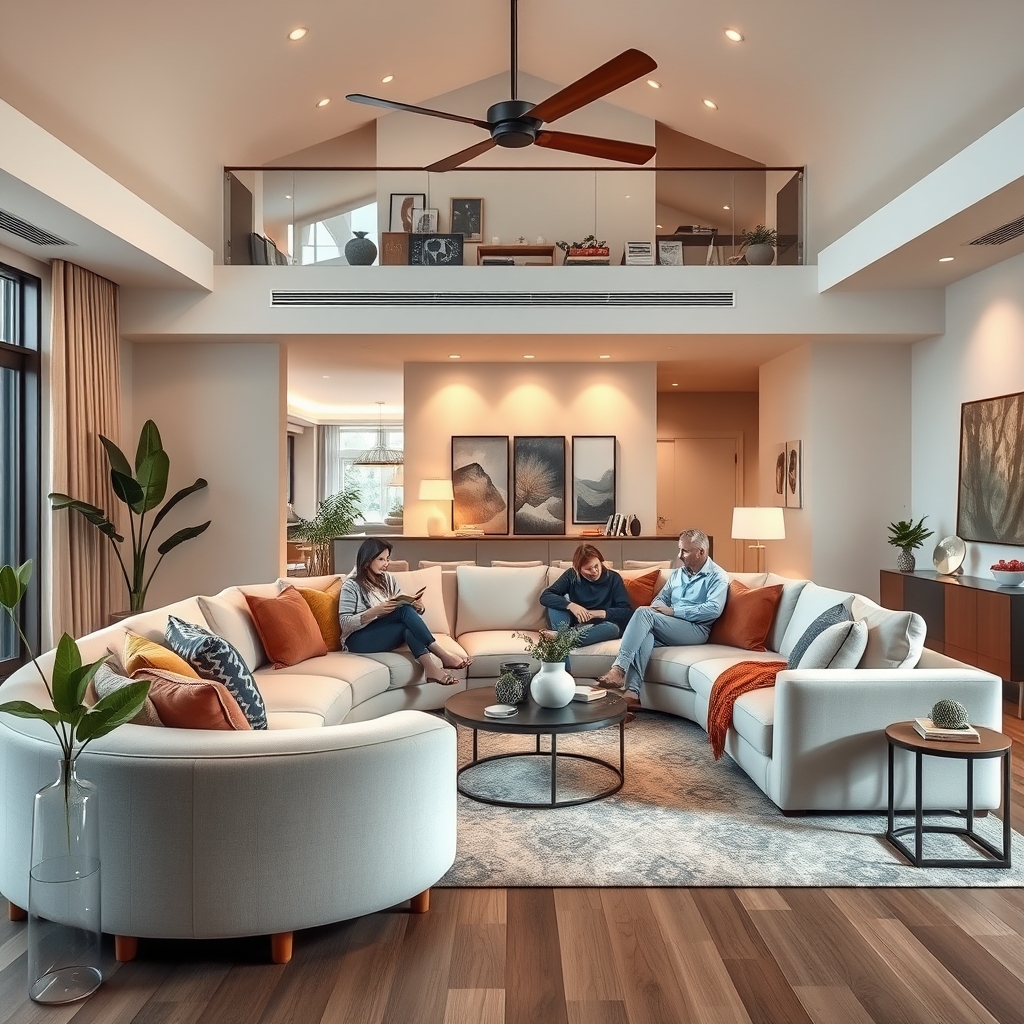
- In open-plan spaces, float the curved sofa to define conversation zones; pair with a round or oval coffee table and an oversized rug for cohesion.
- For small living rooms, hug the curve against a wall and flank with minimalist side tables. Choose a lighter-tone boucle or velvet to reflect more light—petite legs or a low back maximize usable space.
- Add sculptural living room furniture: low arc benches, glam accent lighting, and soft-edge ottomans echo the motif without cramping movement.
- Mix textures—combine the boucle’s coziness with shiny metal, matte black, or glass accessories for dynamic contrast.
- Stage your sofa to photograph well (angled toward windows, cleared of clutter), but live with realistic layers—throws, floor lamps, and trays.
Consumer search demand backs this up: “organic sectional” and “boucle sofa” queries peaked at 95k and 68k monthly, respectively, in 2023–24, proving real homes are craving practical inspiration as much as aspirational looks.
Quick shopping rubric + one‑page decision flow
Tired of buyer’s remorse? Follow this step-by-step rubric to dodge 80% of post-purchase pain points.
- Space/Size: Tape or app-test arc and total footprint.
Red flag: No detailed dimensions or unclear arc radius listed. - Budget/Tier: Set your max—mass, mid, or designer.
Red flag: Non-itemized price, or up-charges for “optional” must-haves. - Fabric/Performance: Match to pets, kids, and real-world cleaning.
Red flag: No care or durability info on product page. - Assembly/Modularity: Probe construction and connection details, especially for organic shape sectionals.
Red flag: “Clip-in” only, no warranty on connectors. - Delivery/Warranty: Confirm white-glove, freight cost, lead times, and in-home setup.
Red flag: Less than 3-year frame warranty or expensive, strict return policy.
Buyer pain points: fit issues (about 33%), modular stability (25%), fabric care (20%), cushion sag (18%), and delivery/returns (15%)—double-check these before you check out.
FAQs
How do I know if a curved sofa will fit in my apartment?
Measure both your intended space and all entry paths (doors, hallways, elevators). Use painter’s tape or a floor plan app to outline the arc’s full footprint. For tight entries, ask if the legs or arms are detachable.
Which is better for families: boucle or velvet?
Boucle is visually inviting but less forgiving for spills, pets, and kids—expect more pilling and snags. Velvet handles wear better and is easier to spot-clean, but may fade with sun exposure. For heavy use, consider a performance microfiber.
What’s the biggest mistake buyers make when choosing a curved sofa?
Underestimating the true footprint—especially the depth and curve. About one third of negative reviews mention the sofa overshoots expectations and blocks walkways.
Do modular sectionals actually hold together?
If the connectors are high quality (hidden brackets or bolt-through, not basic clips), most hold well. However, about 25% of reviews mention connection wobble—test in store if possible and look for a warranty on modular joints.
Are custom curved sofas worth the premium?
If you have a unique room layout or want premium construction and fabric, yes. Custom pieces offer better fit and durability, but they demand careful measurement and patience for long lead times.
—
[…] specific advice on sustainable, durable upgrades in other rooms, check the curved sofa size guide for tips on moisture-resistant furnishings and the color drenching strategy for harmonious, calming […]
[…] Lounge (12’ x 14’): Compact curved sofa (see our sofa size guide), single walnut coffee table, 6’ x 9’ textured rug, mini gallery wall with 3–4 botanical […]